Not every change begins with a major decision. In many cases, organizing a business starts by recognizing that something is not working.
These stories represent real and frequent situations in small businesses that decided to professionalize their management.
Case 1: when the inventory stopped adding up
An artisanal production business was growing its sales but continually had problems with supplies. Sometimes it bought too much; at other times, it ran out of materials in the middle of production.
The problem was not sales, but the lack of clear inventory control.
By recording incoming and outgoing movements and digitizing that information, the business was able to:
-
reduce unnecessary purchases
-
avoid production stoppages
-
improve planning
👉 The change was simple, but the impact was immediate.
Case 2: producing without knowing the stage of each order
Another business had several orders in progress at the same time, but no one knew exactly which stage each one had reached. This caused delays, errors, and complaints.
By organizing the production process into stages and recording every advance, the team gained visibility and control. Less improvisation, more organization.
👉 This type of problem is often linked to a lack of production traceability.
Case 3: working hard, but without data
One business had been operating for years but had never measured its results. It did not know how long production took, where errors occurred, or which processes were more costly.
By beginning to record key information, it was able to identify:
-
hidden losses
-
repeated tasks
-
bottlenecks
Using this data, it made simple decisions that improved profitability.
What these stories have in common
All these business owners shared something:
-
they did not need a complex system
-
they needed order and clarity
-
they were looking for accessible solutions
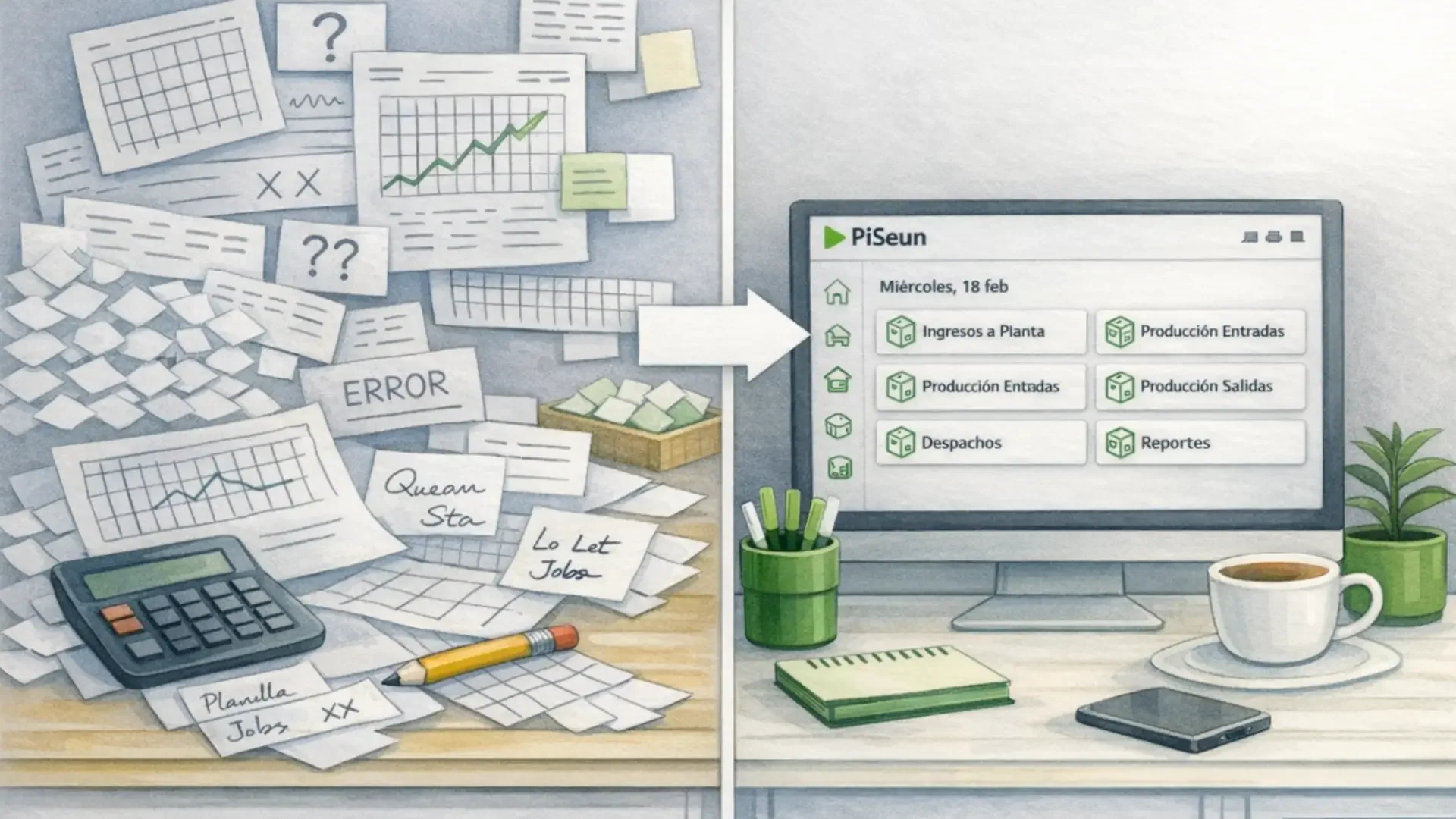
Tools such as PiSeun are designed precisely for these kinds of businesses: small, real, and growing.
Organizing does not slow growth; it enables it
When a business becomes organized, it:
-
works with less stress
-
makes fewer mistakes
-
has greater control
-
can grow without becoming overwhelmed
Organizing management is not the final step: it is the beginning of a better stage.
Conclusion
These stories are not exceptions. They reflect what happens when a business decides to organize its production and information. The change is not always large, but the results are.